Another day for ReadRugbyUnion.com to review the talking points of the day. Today the conversation keeps snapping back to Sydney, where Ireland’s first Test against the Wallabies has become far more than a tidy opening marker in a new international window. Around it sit a Leicester contract call that says plenty about the Premiership front-row market, a Springbok reshuffle with England written all over it, and an Exeter takeover that could change the way English rugby talks about money, control and ambition.
Today’s Main Talking Point: Ireland’s Wallabies Test Late-Breaking Updates
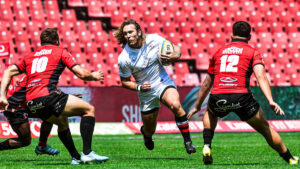
Ireland’s trip to Australia has the crackle of a proper examination because it lands at a point where both sides badly need the match to mean something. For Ireland, the issue is not simply whether they can win in Sydney; it is whether Simon Easterby can keep the side looking sharp, nasty at the breakdown, and clear in the kicking exchanges while the wider programme moves through another leadership phase. For Australia, this is the kind of night that tells supporters whether the Joe Schmidt rebuild has actually hardened or merely survived.
The late-evening mood around this fixture is that Ireland cannot afford to treat it like a polite southern-hemisphere opener. Allianz Stadium being sold out changes the temperature. A full Sydney crowd gives the Wallabies a public stage, and that matters for a side trying to drag itself away from years of false starts. Ireland will know exactly what is coming: early tempo from Australia, plenty of contestable ball, and a clear attempt to make the opening quarter feel awkward rather than pretty. If Ireland’s forwards give away soft exits or allow Australia cheap entries, the whole match becomes a scrap on Wallabies terms.
That is why Easterby’s message from earlier in the day matters. Ireland have enough class to win this through shape, patience and pressure, but this tour is not going to be decided by clean training-ground pictures. The Wallabies will try to squeeze the Irish ruck, slow Jamison Gibson-Park’s rhythm if he starts, and make the visitors play from tramline positions. Ireland’s response has to be blunt: resource the breakdown properly, kick with purpose rather than habit, and take the scoreboard when Australia offer penalties. In a new competition cycle, those small choices become the evidence of whether the team is still ruthless.
The other layer is selection pressure. Ireland’s depth has been discussed for years, but tours like this are where that depth either looks real or becomes a convenient phrase. The loose forwards have to bring enough collisions to stop Australia generating quick second-phase ball. The centres have to manage the defensive reads against runners who will not mind playing loose if the game breaks open. The back three need to own the air, because Schmidt teams rarely hand away territory without a reason. The Wallabies may be eighth in the world conversation rather than at the top table, but they remain dangerous when opponents let the match become emotional.
There is also a bigger question for Irish supporters: is this side still setting the terms, or is it drifting into reaction mode? The best Irish teams of the last decade have forced opponents to live under detail. They have made sides defend phase after phase, then punished fatigue with a carry, a wraparound, or a kick into space. That is the standard this group will be judged against. Sydney will not answer everything, but it will show whether Ireland’s authority travels under pressure. Read our complete earlier coverage on the Simon Easterby Ireland-Wallabies development here.
Around the Ground: The Other Talking Points
Joe Heyes Deal Gives Leicester A Front-Row Line In The Sand
Leicester tying down Joe Heyes lands as one of the day’s bigger Premiership statements because tighthead props with Test miles, club roots and years still ahead of them do not sit around waiting for the market. Heyes is not just another contract renewal. He is a Leicester academy product, an England prop, and now a front-row reference point for a Tigers squad that is trying to look less like a team in transition and more like a side with a spine.
The strategic importance is obvious. Premiership clubs have spent the last few seasons discovering, sometimes brutally, that front-row depth is not a luxury. It is the foundation of everything else. If the scrum creaks, the back row starts defending off the back foot, the half-backs kick under pressure, and the entire attack loses bite. Heyes staying gives Leicester a senior tighthead around whom they can build training standards, scrum identity and selection consistency. It also protects them from a market where experienced props are either expensive, overseas-bound, or already locked into long deals.
For Leicester supporters, the emotional part matters too. In an era when clubs are forced to churn squads quickly, keeping a local long-term player gives the team a bit of recognisable shape. Heyes has taken criticism, carried expectation, and still pushed himself into the England conversation. That combination makes him valuable beyond the contract sheet. It tells younger players there is still a pathway at Welford Road if they are willing to live with the pressure. It tells the league Leicester are not prepared to let their scrum identity drift. The next task is turning that certainty into a pack that can bully big matches again, because sentiment only carries so far once the first scrum folds. The full background is in our Joe Heyes Leicester Tigers contract renewal breakdown.
Elrigh Louw Call-Up Sharpens Springbok-England Edge
Elrigh Louw’s elevation around the Springbok group is exactly the kind of detail that turns a Test week into a selection argument. South Africa do not hand out back-row opportunities casually. Their loose-forward standards are savage: carry hard, clean hard, fold around the corner, dominate the air, and still have enough lungs left to smash the final ten minutes. If Louw is being pushed into the frame, it tells England the Springboks are preparing to keep the match in the collisions.
That matters because England’s route into the game is not mysterious. They have to avoid becoming trapped in a slow, bruising contest where every carry feels like a negotiation with two defenders and a jackal threat. South Africa are at their most suffocating when they win the gainline by inches, force a rushed exit, and then come back through set-piece pressure. Louw’s presence strengthens that picture. He gives Rassie Erasmus another option who can operate in the hard middle of the field, and against England that is not decoration; it is the whole argument.
For England, the response has to be intelligent rather than macho. They cannot simply volunteer for a collision contest and hope to survive. Their kick chase has to be clean, their lineout ball has to be fast enough to deny South Africa easy maul pressure, and their carriers must work in pairs so the Springboks cannot feast over isolated bodies. The fascinating question is whether England can force South Africa to defend width before the Bok pack has turned the match into a test of pain tolerance. Louw’s call-up makes that harder, and it gives Springbok supporters another reason to believe their squad depth is not just impressive on paper but built for the ugliest parts of Test rugby. Our earlier piece on the Elrigh Louw Springboks England selection picture has the full context.
Rugby Union Short-Takes & Transfer Radar
Exeter’s Black Knight Takeover Puts Premiership Ownership Back Under The Microscope
Exeter’s confirmed Black Knight Rugby takeover is not just a finance story; it is a culture story with a balance sheet attached. RugbyPass reported the completion of the deal and the arrival of American investment into Exeter, with the club now moving into a new ownership phase after the long Tony Rowe era. The immediate temptation is to talk about spending power, but the harder question is control. Exeter’s modern identity was built on local force, stubbornness, Sandy Park edge and a coaching setup that squeezed every ounce from the club’s rise. New money can help, but it also brings new expectations, new reporting lines and a sharper demand for growth. If Exeter use the investment to stabilise the rugby department, keep their academy meaningful, and rebuild squad depth without turning the place into a brand exercise, this could be a serious moment for the Premiership. If the club loses the feel that made it hard to play against, supporters will notice quickly. View the original report via Neil Fissler on RugbyPass.
Heyes’ Four-Year Commitment Shows How Tight The Prop Market Has Become
RugbyPass also carried the wider detail on Joe Heyes committing to Leicester on a four-year deal, and that length is the tell. Clubs do not stretch for long tighthead contracts unless they know the alternative is pain. The Premiership has become a league where front-row injuries can wreck whole months, especially with European fixtures, international call-ups and smaller squads biting at the same time. Heyes staying at Leicester gives the Tigers a player who understands the club and still has enough runway to keep improving. It also raises the pressure on the rest of the pack: if the anchor is secure, excuses around scrum inconsistency become thinner. England will watch it too, because a stable club environment for a Test tighthead is rarely bad news for national selection. View the original report via Jon Newcombe on RugbyPass.
AIL Fixtures Give Irish Rugby A Grassroots Test Beneath The Test-Week Noise
Under the noise of Ireland’s Wallabies build-up, the release of the All-Ireland League fixture shape deserves more than a passing nod. Club rugby remains one of the places where Irish rugby’s depth is made real, not just discussed in pathways meetings. Fixture lists matter because they set the rhythm for players trying to push into provincial view, coaches trying to manage semi-professional squads, and clubs trying to keep local support alive when the professional game eats so much oxygen. The AIL cannot be treated as background wallpaper while Ireland chase Test wins abroad. It is part of the same machine. If the league is competitive, visible and well-timed, the national system benefits. If it becomes an afterthought, the pathway narrows. That is why today’s fixture announcement is a small story with a long tail, and why supporters should keep an eye on how clubs handle the opening blocks. We covered the detail in our Energia All-Ireland League 2026/27 fixtures update.
What’s Your Verdict?
The sharpest issue tonight is whether Ireland are walking into Sydney with enough edge to treat the Wallabies like a genuine threat rather than a familiar name in a rebuilding cycle. Australia have the crowd, the Schmidt storyline and the chance to make the opening weekend of the Nations Championship feel uncomfortable. Ireland have the higher standard, the deeper recent pedigree and the responsibility that comes with both.
So what is the verdict: will Ireland impose themselves early in Sydney, or are the Wallabies about to turn this opener into the first proper ambush of the new Test window?