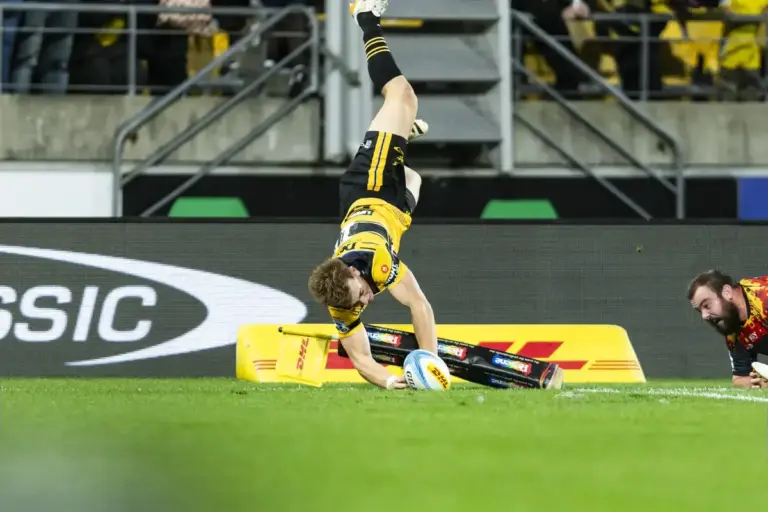
The Hurricanes have spent the season playing as if New Zealand rugby still trusts speed to be substance, not decoration.
That is why Saturday night’s Super Rugby Pacific final in Wellington feels bigger than a normal domestic decider. The Chiefs arrive with the scar tissue and know-how of a side preparing for a fourth consecutive Grand Final, but the Hurricanes bring the competition’s sharpest attacking body of work: 104 tries, a sold-out home ground, and a style that has made the rest of the competition chase shadows.
It is also another timely marker for a New Zealand system that has already had a busy week on Read Rugby Union, from the Maori All Blacks naming picture to the continuing debate around where the next wave of Test players is coming from.
A final built on pace and pressure
The appeal of this final is not just that it is Hurricanes against Chiefs, first against second, or Wellington against Waikato. It is that both teams have reached the last night of the season by asking different questions of opponents.
The Hurricanes have been the pace-setters because their attack has carried genuine variety. Cam Roigard and Ruben Love give them tempo and width at the control points, Jordie Barrett and Billy Proctor supply a midfield blend of power and timing, and the back three have been fed chances by a pack that has been far more than a platform unit.
Devan Flanders’ return from concussion adds another layer to that. In a final week that has already forced both coaching groups to make difficult calls, the Hurricanes can still lean on something close to their strongest identity. That matters when a side’s greatest weapon is rhythm.
Chiefs experience gives the night its edge
The Chiefs are nobody’s supporting act. Jono Gibbes’ side have had to absorb the loss of Lalakai Foketi and the continued absence of Wallace Sititi, while also reshaping the backline with Kyle Brown in midfield, Leroy Carter on the wing and Liam Coombes-Fabling at full-back.
That is a lot of disruption before a final, but it is also exactly the sort of week that tests a squad’s depth rather than merely its first-choice team sheet. The Chiefs have lived around this stage for years now. Luke Jacobson, Tupou Vaa’i, Samisoni Taukei’aho, Damian McKenzie and Quinn Tupaea give them enough Test-class authority to slow the game down if the Hurricanes let them.
Tupaea’s week has been particularly fitting. Named Super Rugby Pacific Player of the Year after a campaign of consistency and power, he now gets the hardest possible final assignment against a Hurricanes midfield that has looked connected all season.
What it says about New Zealand rugby
This is where the game stretches beyond the trophy. New Zealand rugby needs domestic rugby that feels alive enough to shape the national conversation, and this final has done that without requiring artificial hype.
There is a similar pathway story in the background. The New Zealand U20 squad has already underlined the depth beneath the professional game, while the Black Ferns Sevens influx into Aupiki has shown how quickly talent can move between formats and demand attention.
The men’s final sits in the same wider picture. It is not simply a shop window for selectors, although it is obviously that too. It is a test of whether the country’s best provincial rugby can still produce a final with Test-match pace, local feeling and a tactical argument worth watching.
The Hurricanes will try to make the night breathless. The Chiefs will try to make it hard. If both manage it, New Zealand rugby gets the final its season deserves.