Exeter Winger Campbell Ridl Suffers Long-Term Knee Injury
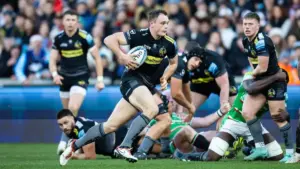
Exeter Chiefs winger Campbell Ridl faces months on the sidelines after suffering a serious knee ligament injury in a pre-season match against Scarlets. Director of rugby Rob Baxter has confirmed the 21-year-old sustained anterior cruciate ligament and cartilage damage in a non-contact incident, ruling him out of the majority of the new season.
Ridl was hurt while slowing down to make a pass. He attempted to carry on playing but was withdrawn from the field shortly afterwards, with the club later confirming the extent of the damage.
The injury is a heavy blow for both player and club, arriving just as the England Under-20 international was building real momentum in the senior game. Supporters can catch up on the wider picture in our latest rugby news bulletin.
Rob Baxter Confirms ACL Damage and Lay-Off Timeline
Baxter did not shy away from the seriousness of the diagnosis when he addressed the media. “It’s a pretty significant knee injury, it’s ACL (anterior cruciate ligament) with bits and pieces, which looks like cartilage damage as well,” he said.
The Exeter boss was also candid about the likely recovery window, stressing that timelines for this type of injury vary widely depending on complications. “You’re talking majority of the season. Good ones can recover pretty quickly and a really fast rehab can be around six months, and then you talk anything up to the nine-month period and beyond if there’s more complications,” Baxter explained.
He went further when asked whether Ridl might be at the quicker end of that scale. “I don’t think it’s going to be a six-month one because of the other bits that have also been damaged in the knee, so unfortunately for Campbell it’s going to be relatively long-term this season,” Baxter said.
Squad Impact and Further Blow to Exeter Backline
The timing is particularly cruel given the impact Ridl made last season. He crossed for 17 tries in 24 appearances, including a score in Exeter’s Premiership final defeat to Northampton Saints at Twickenham. He also claimed back-to-back hat-tricks in the Prem Rugby Cup during February and added six tries in six Premiership matches between mid-March and mid-May.
Baxter acknowledged the cruel timing of the setback. “There’s never a good time to have a serious injury,” he said, reflecting on a player who had just established himself as a genuine first-team threat out wide.
Exeter’s backline options are further stretched by the continued absence of Italy lock Andrea Zambonin, who will miss action until November because of a shoulder injury. Between Ridl’s long-term lay-off and Zambonin’s spell out, Baxter’s squad planning for the opening months of the campaign has become significantly more complicated. Fans can find more on how Exeter and their Premiership rivals are shaping up for the campaign in our recent English rugby updates.
Rehabilitation Process and Physical Development Ahead
Despite the disappointment, Baxter chose to frame the injury as an opportunity for Ridl to develop away from the relentless demands of a Premiership fixture list. “But having it at a time when he’s played his first decent amount of adult rugby in a proper, tough, long season… now he’s got that opportunity to really work on his physical development because obviously the challenges of being ready to play games every weekend are not going to be there,” he said.
Baxter added that the rehabilitation period would allow Ridl to build a more robust physical foundation. “There’s a good deal of physical development he’ll be able to do while he’s recovering from injury,” he said.
The Exeter chief also pointed to Ridl’s academic commitments as a silver lining during the layoff. “He’s also at university and deep in studies, so you’ve got to try to look at the positives of these things,” Baxter said.
Looking at the bigger picture, Baxter urged patience and perspective over Ridl’s enforced break. “If it gives him a period of really good development, getting on top of university studies, getting things really in line for next season then you’ve got to try and look at this as part of the development process he’s going to go through over the next five or six years of his career,” he said. Full details of Baxter’s comments were provided in a BBC Sport report.