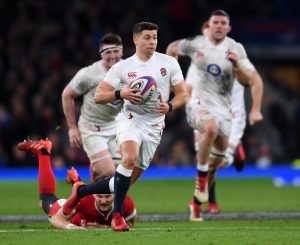
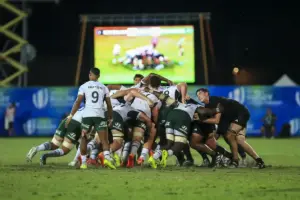
The global rugby landscape enters uncharted territory on Saturday, 4 July 2026, as the inaugural Nations Championship kicks off with the ultimate litmus test: England travelling into the high-altitude, fiercely hostile environment of Ellis Park Stadium in Johannesburg to clash with the back-to-back world champion Springboks.
Steve Borthwick’s tactical roadmap for this definitive encounter has been laid bare in the official line-up. It is a team sheet that represents a fascinating inflexion point for English rugby—juxtaposing structural continuity with bold, high-stakes selection gambits. With talismanic lock Maro Itoje rested for this phase of the summer tour, Borthwick has loaded his starting fifteen with vibrant young talent, explicit tactical roles, and a highly specific game plan tailored to neutralise South African collision dominance.
| Jersey | Player | Position | Club Entity | Caps | Key Stat / Rich Snippet Insight |
| 15 | George Furbank | Full-back | Harlequins | 14 | Returns to the starting 15 to put an injury-plagued 18 months behind him. |
| 14 | Immanuel Feyi-Waboso | Wing | Exeter Chiefs | 13 | Back in action for his first international appearance since last November. |
| 13 | Tommy Freeman | Centre | Northampton Saints | 27 | Enters the match as the most experienced back in a young starting line-up. |
| 12 | Seb Atkinson | Centre | Gloucester Rugby | 4 | Retains his starting midfield partnership from the conclusion of the Six Nations. |
| 11 | Cadan Murley | Wing | Harlequins | 6 | Earns the start on the left wing following a standout performance against France XV. |
| 10 | Fin Smith | Fly-half | Northampton Saints | 16 | Handed the playmaker reins over Marcus Smith, who moves to a 23 impact role. |
| 9 | Jack van Poortvliet | Scrum-half | Leicester Tigers | 24 | Gets the nod to start in the halves ahead of Alex Mitchell. |
| 8 | Ben Earl | Number 8 | Saracens | 51 | Serves as the central anchor of a highly explosive back-row configuration. |
| 7 | Tom Curry | Flanker | Sale Sharks | 68 | Successfully returns from a calf injury to slide straight back into the pack. |
| 6 | Ollie Chessum | Flanker | Leicester Tigers | 35 | Named as a Vice-Captain for this physical Johannesburg clash. |
| 5 | George Martin | Lock | Saracens | 21 | Back in the starting tight five following a lengthy international layoff. |
| 4 | Alex Coles | Lock | Northampton Saints | 19 | Partners Martin in the second row |
| 3 | Joe Heyes | Prop | Leicester Tigers | 22 | Solidifies the tighthead anchor for a heavily tested front row. |
| 2 | Jamie George | Hooker | Saracens | 110 | Team Captain; the most capped veteran in the squad with Maro Itoje rested. |
| 1 | Ellis Genge | Prop | Bristol Bears | 80 | Named as a Vice-Captain to bring immense power to the loosehead side. |
The Tactical Composition of Borthwick’s Starting XV
A close inspection of the team reveals a side designed to absorb early brutality and hit back with lightning-fast transition play. The front row pairs the elite carrying of vice-captain Ellis Genge with the veteran leadership of captain Jamie George, anchored by Leicester’s Joe Heyes at tighthead. Heyes faces the monumental task of absorbing the scrummaging pressure generated by Ox Nche and Malcolm Marx.
In the second row, George Martin brings raw enforcer qualities alongside Northampton’s Alex Coles. The back-row blend is exceptionally dynamic: Ollie Chessum operates as a hybrid blindside flanker and vice-captain, Tom Curry returns to provide elite defensive jackaling, and Ben Earl anchors the pack at Number 8 to inject hyper-athletic ball-carrying off the base.
Behind the scrum, Borthwick has opted for a tactical identity shift. Jack van Poortvliet gets the nod at scrum-half to execute a disciplined, high-chase box-kicking strategy, partnering Fin Smith, who steps into the starting fly-half jersey. The midfield features Gloucester’s physical distributor Seb Atkinson at inside centre and the versatile Tommy Freeman at 13, creating a balanced, direct channel to feed an electric back three comprising Cadan Murley, Immanuel Feyi-Waboso, and full-back George Furbank.
What the Pundits Make of It: Excitement, Risk, and the Shadow of Rested Giants
The reaction across the rugby punditry landscape has been a mix of calculated optimism and sheer terror regarding England’s tight-five depth. Former internationals turned analysts have widely debated Borthwick’s decision to hand Fin Smith the reins over Marcus Smith, who drops to a high-impact bench role alongside playmaker Alex Mitchell.
- The Fly-Half Divide: Pundits from The Telegraph and Sky Sports note that selecting Fin Smith is a direct acknowledgement of the Ellis Park factor. Against a Springbok blitz defence, Fin Smith offers a deeper, more traditional tactical exit game and a high-percentage goal-kicking boot, whereas Marcus Smith’s lateral flair is deemed an asset best deployed against tiring South African legs in the final twenty minutes.
- The Tight-Five Concern: The absence of Maro Itoje has drawn sharp criticism from more conservative corners of the media. Analysts argue that entering an Ellis Park scrum battle without Itoje’s disruptive breakdown presence and set-piece mastery is an immense gamble. However, modern performance metrics defenders counter that George Martin and Ollie Chessum possess the exact engine size needed to match South Africa’s physical output.
- The Rassie Factor: Interestingly, the psychological warfare began early in the Springbok camp. Head coach Rassie Erasmus bypassed England’s starting superstars in the press, explicitly identifying 21-year-old replacement back-rower Henry Pollock as England’s ultimate “dangerman” ahead of the match. Pundits view this as typical Erasmus misdirection, deliberately placing immense psychological weight onto a young player’s shoulders before he even steps foot on the pitch.
Clear Stars and Strategic Roles
For England to survive the opening twenty-minute onslaught, three individuals must deliver world-class performances within their designated tactical systems:
1. Immanuel Feyi-Waboso (The Metrical Weapon)
The Exeter Chiefs winger has transitioned from a breakout talent to an absolute tactical necessity for England. Feyi-Waboso’s role extends far beyond merely finishing scoring opportunities in the corner. Against South Africa’s suffocating defensive line, his primary objective is to act as an auxiliary loose forward during early-phase play. His unmatched ability to break the first tackle on unscripted kick-returns will be vital in transitioning England out of their own standard defensive third.
2. George Martin (The Collision Eraser)
With the tight five missing key veterans, George Martin steps into the role of defensive orchestrator in the tight channels. Martin is one of the few locks in northern hemisphere rugby capable of physically stopping a full-steam South African carrier behind the gainline. His role is simple yet exhausting: dominate the collision window, anchor the defensive driving maul, and clear out ruck threats with uncompromising physical authority.
3. George Furbank (The Tactical Release Valve)
Furbank’s return to the 15 jersey provides Fin Smith with a secondary tactical distributor. When South Africa sends their heavy edge defenders to smother the fly-half, Furbank must slot seamlessly into the line as a second receiver, utilising his elite rugby IQ to exploit the space left behind the advancing Springbok wingers.
Head-to-Head: The Battle of the Playmakers
The strategic outcome of this Nations Championship opener will largely rest on how the respective fly-halves handle the immense pressure cooker of international rugby’s most demanding position.
Fly-Half Comparison Profile
| Metric / Attribute | Fin Smith (England) | Manie Libbok (South Africa) |
| Club Entity | Northampton Saints | DHL Stormers |
| International Caps | 16 caps | 18 caps |
| Primary Tactical Style | Structured Metronome & Kicking Space Finder | Chaos-Orchestrator & High-Variance Playmaker |
| Goal-Kicking Accuracy | Elite (>84% success rate) | Variable (Highly susceptible to pressure drops) |
| Defensive System Role | Standard Pendulum Cover & Frontline Tackler | Hidden in Wide Channels / Ultrafast Sweeper |
Tactical Verdict: Fin Smith provides England with an invaluable sense of structural safety. He rarely gives away cheap turnovers, possesses flawless touch-finding capability, and punishes discipline errors from the tee. Conversely, Manie Libbok is the ultimate high-risk, high-reward operator. Libbok can blow a game wide open with cross-field kick assists or no-look distribution, but if England’s back row can pressure his decision-making time, his error rate spikes significantly. In a tight Test match at altitude, Smith’s consistency gives England a stable platform, but he must match Libbok’s ability to manipulate defensive drift.
Head-to-Head: The Clash of the Skippers
Leadership under extreme physical duress is the final piece of the puzzle. The captaincy battle features a stark contrast in positional demands and psychological influence.
Captaincy Comparison Profile
| Leadership Metric | Jamie George (England) | Siya Kolisi (South Africa) |
| Position | Hooker | Open-side Flanker |
| Test Experience | 110 Caps | 89 Caps |
| Style of Influence | Set-Piece Technical General & Referee Communicator | Inspirational Physical Lead & Emotional Catalyst |
| Primary Match Focus | Scrum Stability & Lineout Throwing Accuracy | Breakdown Disruption & Dominant Tackling |
Tactical Verdict: Jamie George’s leadership is mechanical, operational, and deeply rooted in set-piece precision. With a heavily altered tight five around him, his ability to manage the referee, calm his young locks, and ensure a functional lineout platform is paramount to survival. Siya Kolisi, by contrast, operates on an entirely different spiritual and physical frequency. Kolisi doesn’t just manage a game; his explosive defensive involvements and relentless work rate directly dictate the emotional temperature of the Springbok squad and the Ellis Park crowd. George must find a way to quiet the stadium by systematically slowing down the game, denying Kolisi the opportunity to spark the transitions that South Africa thrives upon.
The Ultimate Verdict
Steve Borthwick has consciously moved away from a safety-first mindset, assembling an England team that balances structural kicking discipline with raw, uninhibited athletic potential. By naming a bench that contains explosive game-changers like Marcus Smith, Alex Mitchell, and the heavily hyped Henry Pollock, England’s primary objective is survival. If the starting line-up can absorb the physical trauma dished out by the Springbok pack over the first fifty minutes, keep the scoreboard within a single score, and maintain set-piece parity, England possesses the structural framework and bench weaponry required to execute a historic upset in Johannesburg.