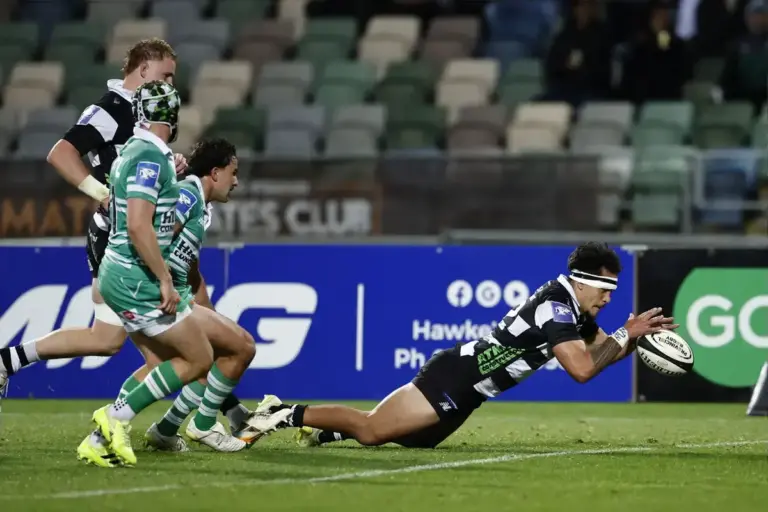
Northampton Saints have their Premiership crown back, and the manner of it will not have been lost on Steve Borthwick.
Saints beat Exeter Chiefs 26-17 at Allianz Stadium on Saturday, turning a title decider that had threatened to tilt into one of Exeter’s bruising survival stories into a final controlled by Northampton’s sharper game management and calmer late-match decision-making.
The scoreline matters because it delivered another domestic title for Phil Dowson’s side. The detail matters because it came on a day when Fin Smith, George Furbank, Henry Pollock, Tommy Freeman and Alex Mitchell all carried wider England relevance into the last club game before the summer conversation really sharpens.
Saints finish the job
Northampton had already been given the perfect emotional opening by Tommy Freeman’s early Twickenham impact, but finals are rarely won by the first clean break alone. Exeter had enough power, enough back-three threat and enough recent knockout nerve to keep dragging the contest back towards the uncomfortable places where they have lived so well this season.
That is where Saints looked most convincing. This was not just another loose, high-tempo Northampton performance. It was a champion team’s version of their rugby: still ambitious, still quick to recognise space, but far less vulnerable to being pulled into panic when Exeter made the game awkward.
Smith’s value sat in that balance. His fingerprints were on Northampton’s rhythm, but just as importantly on their restraint. In a final shaped by momentum swings, yellow-card pressure and Exeter’s ability to turn broken moments into tries, Saints needed a fly-half who could keep asking the right question rather than the loudest one.
Exeter’s threat was real
Exeter will feel the frustration of getting close enough to make Northampton uncomfortable without landing enough pressure to make the favourites crack. Immanuel Feyi-Waboso’s return had already given the Chiefs a major point of difference, and the final again showed why his availability has become such a significant club-and-country issue.
The Chiefs did not arrive as passengers in someone else’s coronation. Their run through the play-offs had been built on resilience, collision edge and an ability to stay alive in games that looked gone. That same quality surfaced again, but Northampton were better at turning the decisive periods into territory, scoreboard pressure and cleaner exits.
Dafydd Jenkins, Tom Hooper and the Exeter pack will take plenty from a campaign that has restored the club’s hard edge. For the losing finalists, though, this will sting because they were not outclassed in ambition. They were beaten by a side that handled the final’s rhythm with more authority.
England questions will follow
The England angle is impossible to miss. Pollock’s final-day audition had already placed him at the centre of a wider back-row debate, and the young No 8 again showed why Northampton’s back-row balance has become a live selection issue.
Furbank’s afternoon carried a different weight. This was not merely another title appearance, but the last act of a Northampton chapter before his move to Harlequins. His composure at full-back, and the emotional context around his Saints farewell, gave the result a deeper pull than the table alone could explain.
Mitchell’s involvement off the bench also completed one of the day’s more important subplots. Saints had resisted the temptation to rush him straight back into the starting side, and the decision underlined just how carefully Dowson’s staff had managed the final week.
For Borthwick, the simplest conclusion may be the most important one. Northampton’s England core did not just play in a final; it won one. That does not settle every summer selection argument, but it gives the conversation a harder edge.
A title with substance
Northampton have spent much of the season being admired for the colour of their rugby. This final added something more durable to the picture.
They were not flawless. Finals rarely allow that. But they were clear enough, tough enough and composed enough to hold off an Exeter side that had made a habit of refusing the obvious ending.
That is why this title lands with substance. Saints did not just win the Premiership by playing beautifully. They won it by proving they could still be themselves when the final started asking harder questions.