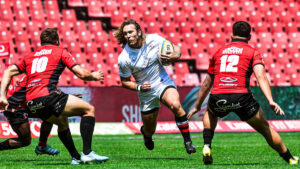
Wallabies Joseph-Aukuso Suaalii
Joseph-Aukuso Suaalii has made it clear he has no intention of being locked into a single role. As expectations build ahead of the 2027 tournament on home soil, the rising star’s preference for positional fluidity is sparking intense debate. Yet, rather than presenting a selection dilemma, this refusal to settle down perfectly complements Les Kiss’s broader tactical vision.
The head coach has embraced a dynamic rotation policy, actively adjusting his matchday squads to build depth and flexibility. For a modern international side preparing to eventually challenge reigning Rugby World Cup champion South Africa, having a versatile athlete capable of shifting seamlessly across the backline is a distinct advantage.
Deploying the 23-year-old effectively has been a central talking point. Speaking at an NFL fan festival in Melbourne, Suaalii explained his approach to the game.
“My personality and me as a human, I’ve always loved trying to master different positions,” he said, as quoted by the Guardian. “I feel like that’s the excitement with rugby. Myself, I know I can play 12, I know I can play 13, I know I can play fullback, I know I can play wing, hopefully when I’m a little bit older I can play 10 as well.”
Suaalii offers a wide range of versatility, with his hard carrying making him an option at 12, while also having the distribution factors that can make him play at either 12 or 13. His pace and raw ability to finish also make him versatile for the wings, and he can also even play at fullback. His time in rugby league has shown that he has the abilities to play all around the park, and this can only be a potential strength for Les Kiss. The tactical approach of the backline, particularly with substitutes, means that backs need to be a little bit more versatile than forwards. There will typically only be one replacement back to cover the centres and back three.
While Joseph Suaalii usually lines up at outside centre, former international players believe giving him occasional freedom out wide could yield devastating results. Discussing his role on the KOKO show, Drew Mitchell suggested tactical flexibility from set pieces, according to Planet Rugby.
“Start him on that set piece on the wing; he can have a 13 on his back, but for those particular strike plays, they’re called strike plays for a reason,” Mitchell noted. “If the best strike that you can throw is having him on the wing, then you put him there. If it’s a centre-field scrum, the best is to have him behind the scrum in the 15 position. Put him there.”
Moving the dynamic back out wide for specific attacking raids does not mean dismantling the team’s core defensive structure. Les Kiss can leverage these hybrid tactics without disrupting vital combinations, such as the established centre pairing between Suaalii and Len Ikitau, who recently linked up for their 17th Test together against Argentina.
Wallabies Adam Ashley-Cooper on Suaalii
Former back Adam Ashley-Cooper echoed the sentiment that the young talent does not need a permanent number change to find space. Also speaking via Planet Rugby, he pointed out the natural tendencies of such an athletic player.
“If you select him at wing, you’re starting him on the edge anyway in space; he’s a natural free player,” Ashley-Cooper said. “He’s going to gravitate towards the ball anyway, so he’s going to find himself in those tighter channels.”
This modern approach to backline configuration mirrors the evolution seen across international rugby, where rigid numbering is making way for hybrid skill sets. As global teams fine-tune their Pacific Nations Cup ambitions and southern hemisphere clashes, adaptability is paramount.
The ongoing series against Los Pumas has highlighted the head coach’s commitment to rotational stability. Following a hard-fought 27-21 victory in San Salvador, the Wallabies made eight changes to their starting lineup. Skipper Harry Wilson returned to lead the pack, while Ben Donaldson stepped into the playmaking role.
“After a physical Test last week, we’ve brought in some fresh bodies alongside some existing combinations as we continue to look to build Test experience across the group,” Kiss explained, according to RTL Today.
By maintaining an open mind regarding positioning, Suaalii fits seamlessly into this forward-thinking setup. Instead of forcing a square peg into a single hole, the Australian coaching staff can tailor their backline shapes to exploit specific opposition weaknesses, ensuring their most dangerous attacking weapon is heavily involved.
Kiss is a new coach and may make changes to the attacking and defensive structures ahead of the home Rugby World Cup in 2027. This may shift Suaalii’s position over the coming year for Kiss.