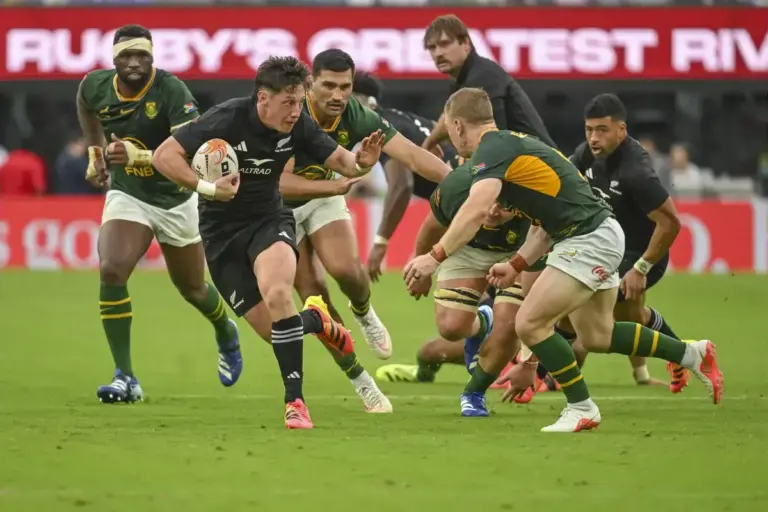
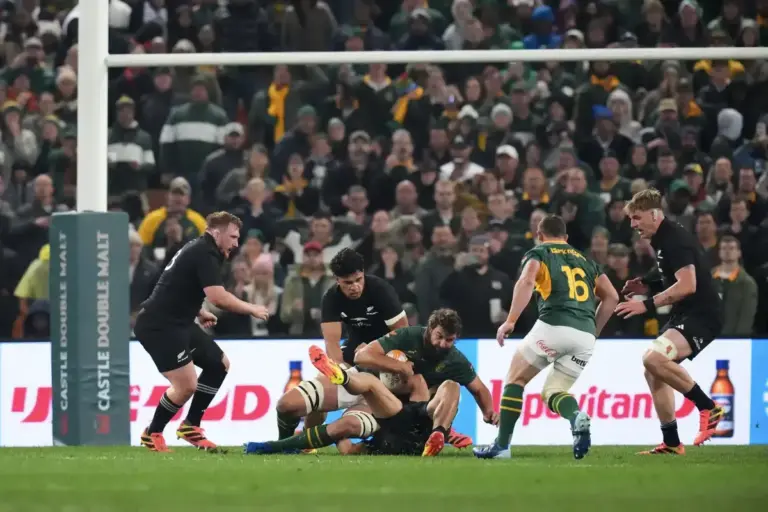
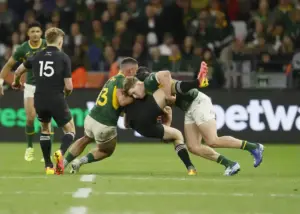
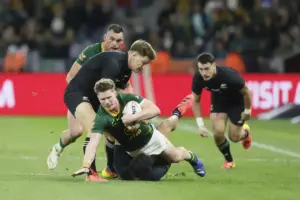
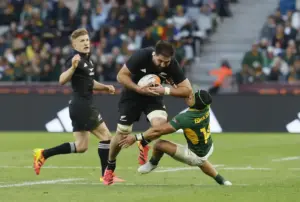
For 40 minutes in Christchurch, the rugby world held its collective breath. It felt like history was repeating itself in the worst possible way for New Zealand rugby.
The All Blacks had stormed out to what should have been a comfortable lead, treating the home crowd to flashes of vintage, free-flowing counter-attacks. But as the halftime whistle blew, a familiar, creeping dread settled over the stadium. The opposition had figured them out. The defensive line was getting shredded, the breakdown was becoming a graveyard for quick ball, and a catastrophic second-half collapse looked not just possible, but entirely inevitable.
Yet, when the final whistle blew, the scoreboard read New Zealand 34, France 32.
It goes down as an instant classic—a heart-stopping thriller that will be analysed for the rest of the season. But the talking point isn’t the narrow escape itself. It’s the masterstroke tactical shift executed by the coaching staff at the break.
Here is the inside story of the one second-half adjustment that completely altered the tactical landscape, neutralised the defensive rush, and saved the All Blacks from a humiliating home defeat.
The First-Half Problem: Suffocating the Solo Pivot
In modern Test rugby, a single fly-half (or pivot) operating behind a retreating or static forward pack is a sitting duck. During the first half in Christchurch, the All Blacks’ attacking system became dangerously predictable.
The opposition deployed a hyper-aggressive, “rush” defensive line. They intentionally ignored the outside backs, sent their midfielders flying up past the gain line, and choked the time and space available to New Zealand’s primary decision-maker.
Every time the ball came out of the ruck, the defensive line was already in the face of the first receiver. Kick-metres were lost, passes were rushed into standard handling errors, and the All Blacks were forced into deep, defensive kicking options that just invited more pressure. It was a tactical stranglehold. To break it, New Zealand didn’t just need better execution; they needed an entirely different structural blueprint.
The Adjustment: Deploying the Dual-Playmaker System
When the teams re-emerged for the second half, the structural shift was immediate. The coaching staff abandoned the traditional direct-distribution model and unlocked their ultimate tactical weapon: the dual-playmaker system.
By positioning Damian McKenzie and Ruben Love as twin tactical hubs on the field simultaneously, the All Blacks completely rewrote the defensive rules for the opposition.
1. Splitting the Field and Doubling the Threats
Instead of Love or McKenzie acting as a standard, deep-lying fullback who simply joined the line on occasion, they operated across the pitch as co-architects. McKenzie marshalled the tight, short-side plays, while Love worked the wider channels on the open side.
This simple adjustment immediately diluted the opposition’s rush defence. A rushing defence relies on knowing exactly where the ball is going to go. When you have two world-class distributors flanking the ruck on either side, the defensive line can no longer blindly blitz the first receiver without leaving a gaping canyon of space on the opposite flank.
2. Creating the “Second-Receiver” Outlet
The magic of pairing McKenzie’s chaotic, instinctive brilliance with Love’s elite vision and straight-line speed is the secondary options it creates. In the second half, when McKenzie was targeted by a heavy defensive hit, he shifted to a tip-pass or a soft pull-back block to Love, who was lurking just behind the initial gainline.
Because Love possesses the kicking game of a frontline fly-half and the running lines of a dynamic fullback, the opposition’s outside defenders were forced to freeze. If they rushed Love, he possessed the ball skills to exploit them over the top. If they sat back, he used his blistering acceleration to pierce the seam.
How the McKenzie-Love Partnership Won the Match
The numbers from the second-half revival paint a vivid picture of how this adjustment rescued the Test match.
| Attacking Metric | First Half (Single Pivot) | Second Half (Dual Playmakers) |
| Gainline Success % | 41% | 63% |
| Defenders Beaten | 4 | 11 |
| Average Ruck Speed | 4.2 seconds | 2.8 seconds |
| Linebreaks | 1 | 5 |
Beyond the data, the psychological shift on the field was immense. The All Blacks went from looking flustered and reactive to completely dictating the tempo of the game.
The match-winning try was a direct result of this dual-headed monster. Off a crumbling scrum, McKenzie took the ball flat, feigning a deep tactical kick. The defense bit hard, swarming his inside shoulder. At the absolute last microsecond, McKenzie popped a reverse pass to Love, who had swept around from the blindside. Love identified the space, drew the last defender, and released the overlapping winger to seal the 34-32 victory.
“We knew we were being too linear in the first half,” Head Coach Scott Robertson noted in the post-match press conference. “By getting Damian and Ruben working in tandem, we forced them to defend two separate passing horizons. It opened up the grass we desperately needed.”
Why This Matters for the All Blacks’ Evolution
This Christchurch thriller wasn’t just an isolated escape; it feels like definitive proof of concept for the future of the All Blacks’ attacking identity.
For years, the most successful international teams—think of the historic twin-axis setups of Richie Mo’unga and Beauden Barrett, or England’s George Ford and Owen Farrell era—have leaned heavily on dual-playmaker metrics to dismantle elite defensive structures.
In McKenzie and Love, New Zealand has found a modern, high-tempo iteration of this classic formula. McKenzie provides the fearless, high-risk, high-reward spark plug that can shatter an organised line on pure instinct. Love provides the calm, surgical precision, spatial awareness, and lethal counter-attacking threat that punishes teams for kicking loosely.
Moving forward, this second-half blueprint shouldn’t just be an emergency adjustment used to rescue a collapsing game in the rain. It needs to be the foundation of the starting XV. When these two share the creative burden, the All Blacks transform from a predictable, bludgeoning side into the most dangerously elusive attacking team on the planet.
Final Thoughts: A Crisis Averted, A Future Found
A 34-32 scoreline at home always invites hard questions. The defensive lapses in the first half and the fragility at the breakdown will ensure the coaching staff has plenty of brutal film sessions throughout the week. A Christchurch collapse was terrifyingly close.
But great teams win when they play poorly, and elite coaching staffs solve complex puzzles under intense pressure. By recognising the limitations of their first-half shape and deploying the dual-playmaker brilliance of Ruben Love and Damian McKenzie, the All Blacks didn’t just save themselves from a historic defeat—they might have just unlocked the tactical blueprint that defines their entire season.