George Kloska and Vilikesa Sela are not the loudest names in England’s Nations Championship squad, but their inclusion may tell us plenty about where Steve Borthwick wants his front row to go next.
England have confirmed a 36-man group for the summer Tests against South Africa, Fiji and Argentina, with Jamie George captaining the side while Maro Itoje is rested. The headline calls sit naturally around the leadership change, the five uncapped players and the size of the challenge ahead, but the prop selections deserve their own attention.
Kloska, the Bristol Bears forward, and Bath’s Sela are both still waiting for a senior Test cap. Both have been around England environments before, yet this tour has a different feel. It is not just another training look. It is a three-Test stretch against demanding opposition, beginning with the world champions in Johannesburg, and it arrives 15 months out from the next World Cup.
England need more than emergency depth
Borthwick’s squad already contains established front-row names. Ellis Genge, Jamie George, Luke Cowan-Dickie, Theo Dan, Joe Heyes, Beno Obano and Asher Opoku-Fordjour give England experience, carrying power and set-piece pedigree. But modern Test rugby has a way of exposing shallow succession plans, particularly at prop.
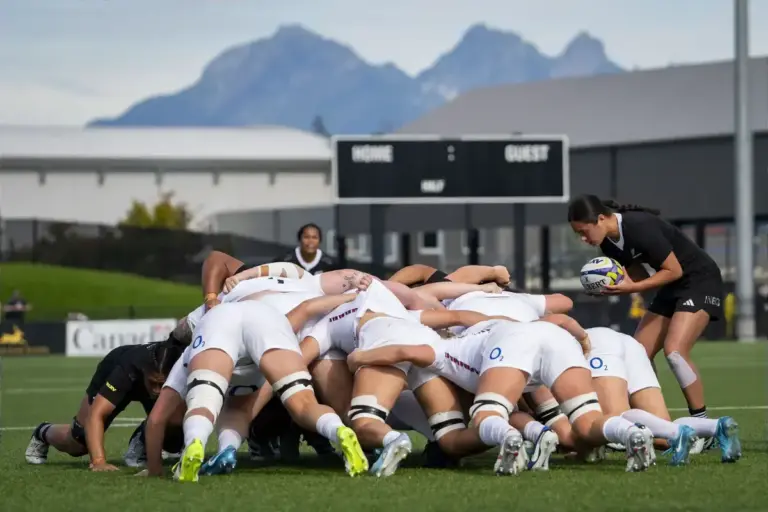
That is why the Kloska-Sela double call matters. England cannot keep treating young or late-emerging props as emergency cover only when injuries bite. They need to find out who can live in a Test week, who can absorb a hostile scrum environment, and who can offer more than survival when the game starts to loosen.
Sela has long looked like one of the country’s more intriguing tighthead prospects. His age-grade pedigree with England, his Bath development and his physical profile have all placed him on the radar for some time. Kloska’s route has been different: a Bristol pathway player, versatile across the front-row picture, and a forward whose resilience has gradually pushed him into the senior conversation.
ReadRugbyUnion has already looked at how England’s uncapped five shape Borthwick’s wider squad, but the front-row strand is especially important because it speaks to the part of the team England cannot fake. Against South Africa in particular, promise is useful only if it can survive pressure.
The South Africa opener changes the stakes
England’s first assignment is not a gentle introduction. South Africa remain the most exacting front-row examination in the sport, and even if Kloska or Sela are not thrown straight into the opener, preparing for that week will be a serious education.
For a young tighthead, or a forward still proving exactly where his Test future sits, the value of that environment is huge. The scrum meetings, the live sessions, the review work and the conversations with senior forwards can accelerate a player’s understanding of what the next level really demands.
There is also a practical layer. England’s recent seasons have repeatedly shown how quickly depth charts can change. Injuries, workload management and club form have made front-row planning more fluid than any coach would like. Borthwick cannot wait until a World Cup warm-up block to decide whether his next group of props are ready.
That same wider selection picture includes the decision to rest Itoje, a call that has already made England’s leadership group a major talking point. As argued after the early squad signals, Itoje’s summer rest always looked like a hard but necessary management call. The front row now has a similar theme: short-term risk in exchange for longer-term clarity.
Kloska and Sela have different cases to make
Sela’s opportunity is about projection. England need to know how close he is to being more than a promising Bath prop with age-grade credit in the bank. The raw materials are obvious, but Test rugby asks different questions: repeat scrummaging, defensive decision-making under fatigue, maul discipline and the ability to reset emotionally after one difficult set-piece.
Kloska’s case is about trust. His appeal lies partly in versatility and partly in the fact he has had to earn each step. For coaches, that matters. A tour across changing climates and opponents needs adaptable forwards who can take information quickly and offer selection flexibility without weakening the bench.
England’s scrum-half picture has already shown how one injury or omission can shift the tone of a squad, with Alex Mitchell’s return and Archie McParland’s setback altering the nine debate. The front row is no different. A player can look like a development pick on Monday and become a live Test option by the following weekend.
That is why this is more than a footnote in the squad list. Kloska and Sela have been selected into a tour that should tell England something meaningful about their next layer of front-row options. Borthwick does not need every uncapped player to become an instant Test regular this summer. He does need to leave July with a clearer idea of which players can be trusted when the pressure climbs.
For England’s rebuild, that might be one of the most valuable outcomes of all.